Saturday, January 8, 2022

Thursday, December 30, 2021
Sunday, November 7, 2021
Lehi's First Vision - Symbols of the Mazzoroth.

"And it came to pass that he returned to his own house at Jerusalem; and he cast himself upon his bed, being overcome with the Spirit and the things which he had seen. And being thus overcome with the Spirit, he was carried away in a vision, even that he saw the heavens open, and he thought he saw God sitting upon his throne, surrounded with numberless concourses of angels in the attitude of singing and praising their God." (1 Nephi 1:7-8)
From its very first chapter, The Book of Mormon carries its readers into the world of the Israelite prophetic traditions. The skill and artistry in which the record is constructed are amazing to behold. With each turning of its pages, the author of this ancient record has encoded ancient wisdom and understanding meant to transform the hearts and minds of its readers by bringing them to the knowledge and covenants God made with the Fathers. The knowledge of the Mazzorth or the Israelite Zodiac is part of this body of ancient wisdom. Mazzoroth is the Hebrew term for the Zodiac or the Constellations:
"Canst thou bind the sweet influences of Pleiades, or loose the bands of Orion?
Canst thou bring forth Mazzaroth in his season? or canst thou guide Arcturus with his sons?
Knowest thou the ordinances of heaven? canst thou set the dominion thereof in the earth?"
(Job 38:31-33)
Lehi's First Vision:
After the Prophet Lehi encounters the pillar of fire that comes down and dwells upon the rock. He returns to his home enraptured by the Spirit of God and visions of glory. As he fell to his bed, he was carried away in a vision. He beheld God sitting upon his throne encircled by angels in the attitude of singing and praising God. Because of our deeply influenced Greek-Western culture, this account often evokes images of a large man with a white beard sitting upon his throne surrounded by white, blond-haired, blue-eyed people in white robes (and sometimes with actual wings) surrounding him while singing and playing musical instruments.

From the Israelite perspective, the heaven he is beholding is the night sky above.

The throne of God is the Galactic center, and the stars are the concourses of angels surrounding the throne.
In the Israelite mind, the imagery of God and angels were connected with these astronomical bodies. We find similar knowledge and understanding among its sister cultures of the time where the Egyptians equated the Galactic Center with the eye of Horus:

THE TABERNACLE: THE DESIGN AND SYMBOL OF THE HEAVENS
The tabernacle in the wilderness in ancient Israel was a microcosm of the Heavens above. Whatever its actual design, the tabernacle was a pattern of the cosmos:


As the heavens are opened to Lehi, he sees the visible galactic center with the numberless stars surrounding the Galactic Center (The Throne of Heaven).
Lehi then goes on to record:
"And it came to pass that he saw One descending out of the midst of heaven, and he beheld that his luster was above that of the sun at noon-day. And he also saw twelve others following him, and their brightness did exceed that of the stars in the firmament." (1 Nephi 1:9-10)
The "One" being referred to here is one of the stars (or stellar bodies) descending from heaven and falling toward the horizon. The twelve others following him are the constellations of the Zodiac as the stars of the Zodiac are the brightest stars compared to the others that shine in the sky.
Lehi then continues:
"And they came down and went forth upon the face of the earth; and the first came and stood before my father, and gave unto him a book, and bade him that he should read. And it came to pass that as he read, he was filled with the Spirit of the Lord."
Here the constellations of the Zodiac begin to fall or "go forth upon the face of the earth" before him. Lehi then is given to understand by revelation that the first constellation that goes down carries a message of judgment upon the earthly city of Jerusalem.
So what constellation did Lehi See?
As the "One" being referred to in verse 11 is a celestial body, the question we may then ask is which celestial body is "The One." Lehi communicates that this particular celestial body came down before him and gave him a book (revelation). He goes on to declare the words of the book which this particular "One" had given him:
"And he read, saying: Wo, wo, unto Jerusalem, for I have seen thine abominations!
Yea, and many things did my father read concerning Jerusalem—that it should be destroyed, and the inhabitants thereof; many should perish by the sword, and many should be carried away captive into Babylon.
And it came to pass that when my father had read and seen many great and marvelous things, he did exclaim many things unto the Lord; such as: Great and marvelous are thy works, O Lord God Almighty! Thy throne is high in the heavens, and thy power, and goodness, and mercy are over all the inhabitants of the earth; and, because thou art merciful, thou wilt not suffer those who come unto thee that they shall perish!
And after this manner was the language of my father in the praising of his God; for his soul did rejoice, and his whole heart was filled, because of the things which he had seen, yea, which the Lord had shown unto him." (1 Nephi 1: 13-15)
The message being delivered by this One constellation is a message of judgment. If we look to the ancient Israelite Mazzoroth, we can identify two possibilities of the constellations Lehi may have observed:

One possibility is the constellation Libra near the Galactic Center, which was equated with judgment. The celestial bodies surrounding it were identified with the throne of glory, the throne of mercy, and the Throne of Judgment. In the picture above, we see Ophiuchus (identified with the angel Michael-whose name means One Like God or Who is Like God-standing near the galactic center and near Scorpio and Libra.)
Another possibility is the Constellation Orion (Nephil-in Hebrew). If we hold to the Passover themes exhibited in Lehi's Exodus, this "One" constellation could be Orion descending to earth with the constellation Eridanus at his feet (In Ancient Israel, Eridanus is also called The River of the Judge). That Orion's luster was above that of the noonday sun, describing Orion's position to the sun and its heavenly path (the ecliptic). I personally tend toward the latter or an Orion Connection.

Whatever the case may be, we see from the very first chapter of The Book of Mormon much of the ancient astronomical knowledge possessed by Abraham, Isaac, and Jacob in this very Israelite record. The record of the Book of Mormon is full of this knowledge that is just waiting to be revealed to our eyes-for those who have eyes to see.
Copyright Robert Kay November 7, 2021
Saturday, November 6, 2021
Horses in The Book of Mormon: A Different View

"And it came to pass that after we had sailed for the space of many days we did arrive at the promised land; and we went forth upon the land, and did pitch our tents; and we did call it the promised land.
And it came to pass that we did begin to till the earth, and we began to plant seeds; yea, we did put all our seeds into the earth, which we had brought from the land of Jerusalem.
And it came to pass that they did grow exceedingly; wherefore, we were blessed in abundance.
And it came to pass that we did find upon the land of promise, as we journeyed in the Wilderness, that there were beasts in the forests of every kind, both the cow and the ox, and the ass and the horse, and the goat and the wild goat, and all manner of wild animals, which were for the use of men. And we did find all manner of ore, both of gold, and of silver, and of copper." ( 1 Nephi 18:23-25)
The mention of horses in The Book of Mormon has been quite controversial. Over the years many critics of The Book of Mormon have disputed the presence of horses and other animals in the Americas. While some declare the presence of many of these animals in the new world before European incursions, others claim that many of these animals (specifically horses) were not to be found. However, an ancient Israelite approach to this scripture actually reveals something entirely different.
Pitching Our Tents
"And it came to pass that after we had sailed for the space of many days we did arrive at the promised land; and we went forth upon the land, and did pitch our tents; and we did call it the promised land. "
The phrase "pitch our tents" is an Israelite prophetic marker that is meant to communicate to the reader of the text that the account they are about to read has a connection with Moses Tabernacle in the Wilderness. The Tabernacle in the Wilderness is the pre-cursor of the physical temple constructed by King Solomon. The Tabernacle or tent in the Wilderness is a pattern of the astronomical heaven above containing the planets, the constellations, and other celestial signs and markers. In other words, when we "pitch our tents," the reader is meant to view the text from the context of Temple and the heavens above.


So the question is then asked, "What do the Tent in the Wilderness and Astronomical bodies have to do with horses?"
SeedTime and Harvest:
Nephi's account then goes on to state:
"And it came to pass that we did begin to till the earth, and we began to plant seeds; yea, we did put all our seeds into the earth, which we had brought from the land of Jerusalem. And it came to pass that they did grow exceedingly; wherefore, we were blessed in abundance. "
In ancient Israel, the cycles of the constellations and various stars determined the seasons for seed time, planting, and harvesting. There are also ancient traditions that planting certain crops under the light of various stars and celestial bodies caused the crops to produce in greater abundance in conjunction with nourishment and influences provided by the sun, moon, moisture, and the soil.
Again what does this have to do with Horses?
"And it came to pass that we did find upon the land of promise, as we journeyed in the Wilderness, that there were beasts in the forests of every kind, both the cow and the ox, and the ass and the horse, and the goat and the wild goat, and all manner of wild animals, which were for the use of men. And we did find all manner of ore, both of gold, and of silver, and of copper."
Nephi then goes on to describe the beasts of the forests found upon the land of promise as they journeyed in the Wilderness. While the peshat or literal level of interpretation tells of the story of the animals they found upon the land of promise, the verse is also meant to communicate an astronomical principle. In the ancient Israelite astronomical view, the land of promise is our viewpoint from the earth as we look into the sky, with the Wilderness being the night sky above with the varying stars and constellations. Thus, the animals that Nephi describes are the symbols of the stellar bodies that they used to determine seedtime and harvest and symbols meant to convey higher teachings.

the cow= Aldebaran (in some traditions, this gets switched with Taurus as well)
the ox = Taurus
and the ass = Issachar- What we call the Constellation Cancer
the horse- asher- three horse-related constellations were found. Bootes rose in the East, while Scheat and Pegasus, the flying horse, were setting, and Sagittarius, the centaur.
the goat - Naphtali - Capricorn
the wild goat-Aries
But what about the mention of Gold, Silver, and Copper?
"And we did find all manner of ore, both of gold, and of silver, and of copper."
In addition, Nephi also communicates the types of knowledge that they obtained from the signs in the heavens using the following symbols:
Gold: Knowledge of The Throne of Heaven, The Galactic Center, or Celestial.
Silver: Knowledge of the Creation and the Stars of Creation.
Copper: Knowledge of the Angels and the Earth here below.
We find a second witness of this prophetic pattern regarding the connection between seedtime and harvest and the constellations in Enos:
"And I bear record that the people of Nephi did seek diligently to restore the Lamanites unto the true faith in God. But our labors were vain; their hatred was fixed, and they were led by their evil nature that they became wild, and ferocious, and a blood-thirsty people, full of idolatry and filthiness; feeding upon beasts of prey; dwelling in tents, and wandering about in the Wilderness with a short skin girdle about their loins and their heads shaven; and their skill was in the bow, and in the cimeter, and the ax. And many of them did eat nothing save it was raw meat; and they were continually seeking to destroy us.
And it came to pass that the people of Nephi did till the land, and raise all manner of grain, and of fruit, and flocks of herds, and flocks of all manner of cattle of every kind, and goats, and wild goats, and also many horses." (Enos 1:20-21)
We also find a third witness of this prophetic pattern in Ether:
"And the Lord warned Omer in a dream that he should depart out of the land; wherefore Omer departed out of the land with his family, and traveled many days, and came over and passed by the hill of Shim, and came over by the place where the Nephites were destroyed, and from thence eastward, and came to a place which was called Ablom, by the seashore, and there he pitched his tent, and also his sons and his daughters, and all his household, save it were Jared and his family... And the Lord began again to take the curse from off the land, and the house of Emer did prosper exceedingly under the reign of Emer; and in the space of sixty and two years they had become exceedingly strong, insomuch that they became exceedingly rich-- Having all manner of fruit, and of grain, and of silks, and of fine linen, and of gold, and of silver, and of precious things; And also all manner of cattle, of oxen, and cows, and of sheep, and of swine, and of goats, and also many other kinds of animals which were useful for the food of man. And they also had horses, and asses, and there were elephants and cureloms and cumoms; all of which were useful unto man, and more especially the elephants and cureloms and cumoms." (Ether 9:3, 16-19)
While there are those who want to argue the zoology of The Book of Mormon. It may also be prudent to consider these descriptions in light of their cosmological significance. While the mention of cureloms and cumoms gets a laugh from a gentile audience, it might be wise to consider these were also ancient astronomical symbols. Much of the knowledge of the fathers like Abraham has been lost through the millennia, but The Book of Mormon preserves much of this ancient knowledge of the heavens encoded into the text.
Copyright Robert Kay November 5, 2021
Thursday, October 28, 2021
Knowing The God In Whom You Should Trust: Preparing for the Old Testament (The TaNaKh)
"And if there were miracles wrought then, why has God ceased to be a God of miracles and yet be an unchangeable Being? And behold, I say unto you he changeth not; if so he would cease to be God; and he ceaseth not to be God, and is a God of miracles. And the reason why he ceaseth to do miracles among the children of men is because that they dwindle in unbelief, and depart from the right way, and know not the God in whom they should trust." (Mormon 9:19-20)
The purpose of the scriptures is to know the God whom we should trust. In Hebrew, the word for "know" is the word yada, which means not only learning about something or someone but experiencing something or someone. It is not a superficial experience of God but a profoundly intimate experience. In the Israelite worldview, The Old Testament is the foundation of this experience.
The Book of Mormon as a Jewish/Israelite record heavily depends on the language, customs, and the scriptures of the Jews for correct interpretation. The heart of all Israelite scripture is the Torah, often called the five books of Moses (Genesis, Exodus, Leviticus, Numbers, Deuteronomy). Without the Torah and the Heart of the Covenant, people approach the Book of Mormon with their Christian/Pagan Eyeglasses rather than Messiah/Hebrew glasses. As a result, the covenant message of the Book of Mormon becomes twisted into a pseudo-born again Christian document with weird names and a nice message about Jesus. However, when viewed through an Israelite paradigm and covenant lenses, the message of the Book of Mormon is unveiled as a message to the descendants of the House of Israel, the promises made to them, and their role in bringing forth Zion and the Restoration of All Things.
The Plates of Laban – The TaNaKh
The Torah contains God’s laws and instructions given to all Israel as a roadmap for a Zion (a marked or set apart) people. As a result of Israel disregarding the commandments of God, the people continually fell into a state of iniquity (lawlessness). The importance of the Torah cannot be overstated to an Israelite because it contains the Heart of the Covenant Relationship between God and his people Israel. Without this Heart, the life-giving blood of the Spirit of God cannot flow to the body of his people.
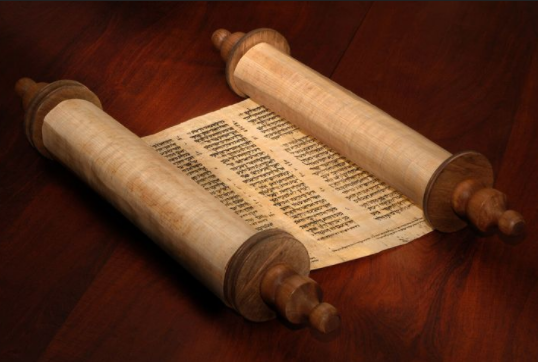
When God commanded Lehi to send his sons to obtain the Plates of Laban, he did so knowing that the plates of Laban contained the Torah (Five Books of Moses), the writings of the Prophets (Neviim), and other historical writings such as the Psalm, Proverbs, etc. (Ketuvim):
“And after they had given thanks unto the God of Israel, my father, Lehi, took the records which were engraven upon the plates of brass, and he did search them from the beginning. And he beheld that they did contain the five books of Moses, which gave an account of the creation of the world, and also of Adam and Eve, who were our first parents; And also a record of the Jews from the beginning, even down to the commencement of the reign of Zedekiah, king of Judah; And also the prophecies of the holy prophets, from the beginning, even down to the commencement of the reign of Zedekiah; and also many prophecies which have been spoken by the mouth of Jeremiah.” (1 Nephi 5:10-13)
THE LAW AND THE PROPHETS
"Think not that I am come to destroy the law or the prophets. I am not come to destroy but to fulfil; For verily I say unto you, one jot nor one tittle hath not passed away from the law, but in me it hath all been fulfilled." (3 Nephi 12: 17-18)
We often hear the phrase "The Law and The Prophets) quoted throughout the scriptures. In Hebrew, The Law is called The Torah, which is composed of the 5 Books of Moses (Genesis, Exodus, Leviticus, Numbers, and Deuteronomy). While the word Torah is translated as "THE LAW" throughout the scriptures, it is more accurately translated a Instructions- as in a Father's instructions to his Children and often likened to the decrees of the King. As a body of scripture, The Torah is the foundational document that established The House of Israel in a similar way that The Constitution established The United States of America.
The term Prophets (Nevi'im) is referring to to the records of varying prophets such as Isaiah, Jeremiah, Daniel, etc. The words of the prophets contain divine messages and instructions to teach God's people how to "fulfill" (a Hebrew Idiomatic expression meaning to correctly interpret and carry out) God's instructions. The writings of the Prophets also give prophetic warnings and contain sealed (or encrypted) teachings intended for those who diligently seek after the greater things of God.
In Israel, the Plates of Laban would then fall under a Hebrew called Tanakh. This acronym breaks down as follows:
T = Torah – First Five Books of Moses
N = Neviim – The Prophets/Writings of the Prophets
K= Ketuvim- Historical Records such as Kings, Chronicles, and writings like Psalms, Proverbs, etc.
The importance of these brass plates cannot be overemphasized. The Torah and the writings of the prophets contained on these plates allowed them to preserve their language, history, and laws. But, more importantly, it maintained the foundation upon which God established his covenant and the principles that enabled the Nephites to obtain the blessings of God’s covenant.
The Old Testament As A Multi-Dimensional Record
The language of Hebrew captures and embodies multi-dimensional aspects of the word of God. As a functional language, it is designed to be uttered by our physical tongue but embedded in this language are principles of astronomy, mathematics, geometry, chemistry, physics, grammar, etc. This knowledge was passed down from Adam through the hands of the patriarchs such as Enoch, Noah, and Melchizedek. From there, it was transmitted to Abraham, Isaac, and Jacob (Israel) down to the tribes of Israel and their descendants.
The scriptures from the House of Israel are like a winding staircase or a divine helix of DNA that contains the essential building blocks of creation. Our ascent through the four worlds or dimensions of scripture is taught to this day in Israel through a system of interpretation called PaRDeS. PaRDeS is an acronym formed from the initials of the four levels or approaches to understanding the revelations of God:
1. Peshat – The simple, literal meaning of the word or account.
2. Remez – The allegorical or symbolic meaning of the word or account.
3. Deresh – A comparative meaning as compared to similar occurrences, accounts, or teachings.
4. Sod (pronounced with a long O sound)– The secret, esoteric, or mystical meaning
Peshat:
To demonstrate and apply this science of ancient Israel, let us examine the following scripture: “And my father dwelt in a tent” (1 Nephi 2:15). As we discussed earlier, sometimes, the greatest of truths are hidden in plain sight. How many times have you as a reader read through the Book of Mormon and simply passed over this one sentence verse, “And my father dwelt in a tent.” The verse looks pretty straightforward, simple, and literal. Reading this verse may draw images of desert Bedouins living in their tents in a desert wilderness surrounded by camels and stock. This verse's simple and literal (Peshat) reading is that Lehi literally dwelt in a tent. Yet, to the initiated mind of an Israelite, this verse reveals so much more about the man Lehi and lends itself to a great truth of this hidden science.
Remez:
This dimension comprises allusion using allegorical, metaphoric, and symbolic words and imagery. In this dimension, an Israelite begins to ask, “Where has God revealed these things in the covenant God made with the Fathers”: (The TaNaKh – The Torah –Five Books of Moses, The Neviim –the Prophets, or the Ketuvim – the Writings). The verse, “And my father dwelt in a tent,” directs the Israelite mind to the Mishkan or “tent of dwelling,” often called the “tabernacle in the wilderness” or the “tabernacle of Moses.”
Deresh:
Derash is the dimension of understanding the comprises the interpretive meaning of the text. These interpretive teachings can often be found in the teachings of prophets like Isaiah, Jeremiah, Ezekiel, and Daniel, wherein the mind of an Israelite is drawn to examine similar occurrences and teachings. These occurrences and teachings have historical precedent, legal precedent, and instructional precedent passed down by inspired teachers. In some ways, it is like a sermon or teaching- Jacob's Sermon at the Temple or, say, King Benjamin's Sermon at the Temple.
Sod:
The sod level of interpretation pertains to the mysteries or hidden things of God. They pertain to those things of the divine throne or council of heaven. They are the teachings regarding the journey of the Soul and its ascent from Earth to Heaven. It is what is called the Great and Marvelous teachings. “It is the glory of God to conceal a thing and the glory of kings to search out a matter!” (Proverb 25:2) As all Israel was called to be a nation of kings and priests to God, then it was the glory of kings to search out the concealed things of God.
Copyright October 28, 2021 - Robert Kay
Subscribe to:
Posts (Atom)